
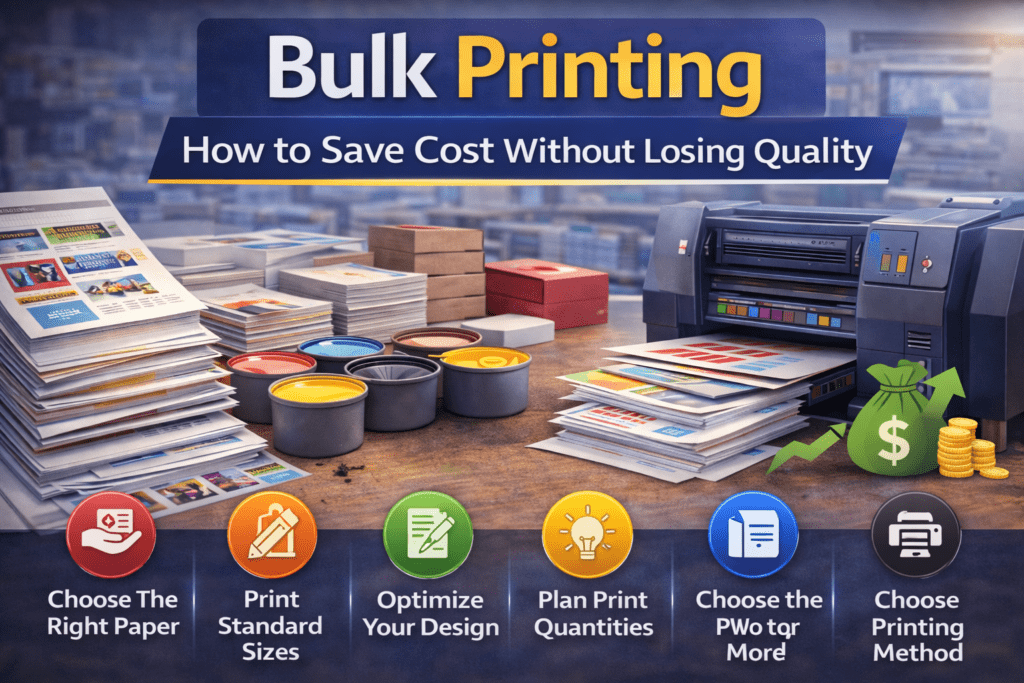
Bulk printing is one of the most effective ways businesses reduce printing expenses while maintaining professional quality. Whether you need brochures, flyers, business cards, or corporate stationery, printing in larger quantities significantly lowers the cost per unit.
However, many businesses worry that reducing costs might compromise quality. The good news is that with the right strategies, you can achieve high-quality prints while saving money.
What Is Bulk Printing?
Bulk printing refers to producing large quantities of printed materials in a single print run. This method is commonly used for:
- Flyers
- Posters
- Brochures
- Business cards
- Notebooks
- Corporate stationery
- Packaging materials
Because printing setup costs remain the same regardless of quantity, larger print runs reduce the price per piece.
Why Bulk Printing Is Cost-Effective
1. Lower Cost Per Unit
Printing companies set up machines, plates, and inks before production starts. These setup costs are fixed.
When you print:
- 100 copies → Higher cost per piece
- 10,000 copies → Much lower cost per piece
Bulk printing spreads setup costs across more items.
2. Reduced Production Time
Large runs allow printers to operate continuously, reducing machine adjustments and downtime.
This improves efficiency and lowers production costs.
3. Consistent Print Quality
Offset printing, commonly used for bulk jobs, produces consistent colors and sharp details across thousands of copies.
This ensures your marketing materials maintain professional quality.
How to Save Cost in Bulk Printing Without Losing Quality
1. Choose the Right Paper
Premium paper is not always necessary. Selecting the correct GSM and finish can reduce costs while maintaining quality.
Examples:
- 130–170 GSM for flyers
- 250–350 GSM for business cards
- 100 GSM for letterheads
2. Print Standard Sizes
Using standard sizes like:
- A4
- A5
- DL
- A3
reduces paper waste and lowers production costs.
Custom sizes often require extra trimming and increase costs.
3. Optimize Your Design
Good design can reduce ink usage and printing costs.
Tips:
- Avoid excessive dark backgrounds
- Use simple color combinations
- Maintain proper margins and bleed
4. Plan Print Quantities in Advance
Printing smaller batches multiple times is more expensive than printing once in bulk.
For example:
Printing 500 flyers five times costs more than printing 2,500 flyers once.
5. Choose the Right Printing Method
For large quantities, offset printing is the most cost-effective method.
For small batches, digital printing may be better.
Understanding when to use each method helps control costs.
Best Products for Bulk Printing
Businesses commonly use bulk printing for:
- Marketing flyers
- Promotional posters
- Product catalogs
- Brochures
- Corporate stationery
- Packaging inserts
These materials are often distributed in large quantities, making bulk printing ideal.
Business Benefits of Bulk Printing
Bulk printing helps businesses:
- Reduce marketing costs
- Maintain consistent print quality
- Increase promotional reach
- Improve brand visibility
- Manage large-scale campaigns efficiently
It is especially useful for events, product launches, and seasonal promotions.
Conclusion
Bulk printing is one of the smartest ways businesses can reduce printing costs without compromising quality. By choosing the right paper, design, and printing method, companies can achieve professional results while keeping expenses under control.
Planning your printing needs in advance ensures better pricing and consistent branding across all marketing materials.